
Introduction: Vision 2030 and the AI-Driven Digital Economy
If you walk into an innovation hub in Riyadh or Jeddah today, you’ll feel the buzz. Hackathons are everywhere, startups are scaling, and global tech giants are pouring billions of dollars into the Kingdom. This isn’t accidental, it’s Saudi Arabia’s progressive shift to a tech-based economy from an oil-based one through Vision 2030.
At the heart of this transformation lies artificial intelligence (AI). The future of web development in Saudi Arabia is being shaped by AI tools, frameworks, and coding platforms that are rapidly redefining the IT industry. For developers, this means one thing: the game is changing fast.
The Current Landscape of Web Development in Saudi Arabia
Startups, Hackathons, and Innovation Hubs in Riyadh & Jeddah
Saudi Arabia has become a fertile ground to start tech businesses. Events like LEAP in Riyadh highlight the country’s ambition to be a regional hub for tech innovation. Hackathons and startup incubators are driving talent development and partnerships with international companies bring global expertise to the Kingdom.
Role of Government Investments in AI and Digital Workforce
The government has earmarked billions for AI-focused infrastructure and skills training. With Vision 2030 emphasizing non-oil sector investments, the government is spending billions of dollars on AI training and tech infrastructure. The demand is shifting toward AI engineers, system architects, and data-driven developers who can build next-generation digital platforms.
AI vs Traditional Web Development: A Paradigm Shift
The Limitations of Traditional Web Development
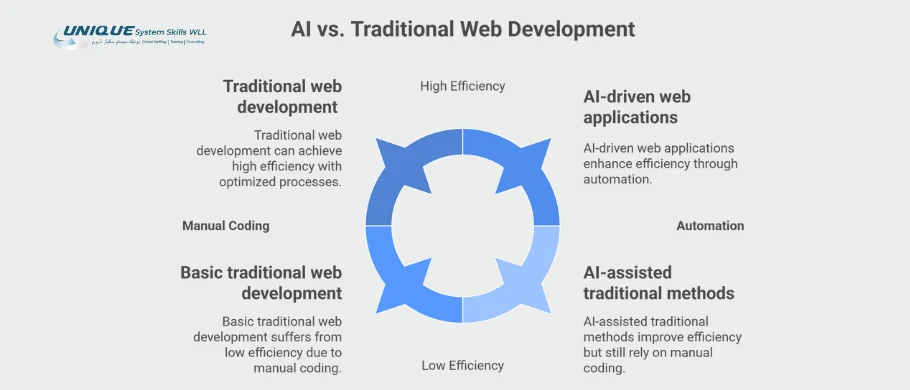
For decades, web development has had a predictable path: mastering HTML, CSS, and JavaScript, then moving on to frameworks like React or Angular. This approach is effective but, it is also:
- Slow – building components from scratch consumed hours.
- Repetitive – developers often wrote boilerplate code repeatedly.
- Complex – every new framework added months of learning.
This model no longer matches the fast-paced demands of modern businesses in Saudi Arabia.
AI-Powered Coding and Automation Advantages
AI-powered tools are transforming development:
- Code generation speeds up the process.
- Automated debugging enhances security and performance.
- Intelligent design tools create personalized user experiences.
In fact, studies show 68% of developers save over 10 hours weekly when using AI-assisted tools compared to coding manually. This efficiency is driving widespread adoption in Saudi’s tech ecosystem.
Key Web Development Trends in KSA Shaped by AI
Personalized User Experience and Smart Interfaces
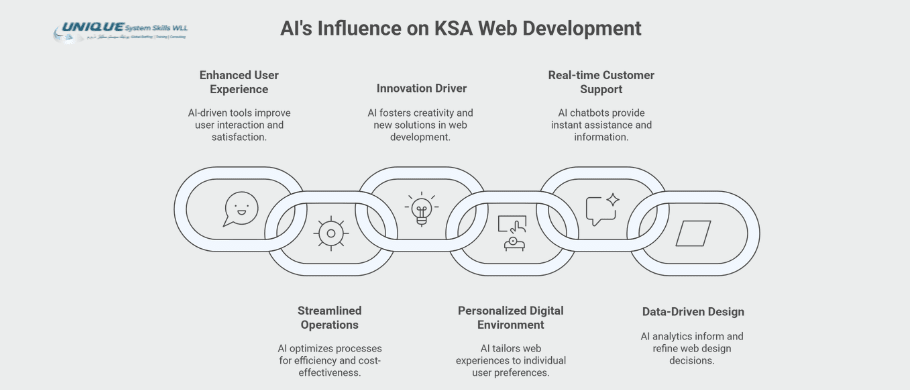
AI enables websites to adapt in real time, offering custom dashboards, recommendation engines, and chatbot support.
Automated Testing, Debugging, and Security Enhancements
AI-driven tools can detect vulnerabilities faster than human testers. This ensures stronger cybersecurity in finance, healthcare, and government systems.
Low-Code and No-Code Platforms with AI Integration
Platforms like Bubble and Webflow are integrated with AI. These platforms empower even non-technical professionals to build applications quickly, reshaping the developer’s role.
AI Tools for Developers Transforming the Industry
GitHub Copilot and Real-Time Code Generation
This tool assists developers by predicting and writing code snippets instantly, reducing repetitive tasks.
Wix ADI and AI-Driven Website Design
For small businesses and startups in Saudi Arabia, Wix ADI automatically creates customized websites based on user input.
ChatGPT and AI Assistants for Debugging & Documentation
From code documentation to error fixing, AI assistants like ChatGPT streamline workflows and free developers to focus on higher-level problem-solving.
Market Projections: AI Growth in Saudi Arabia
National Strategy for Data & AI and Workforce Development
Saudi Arabia launched its National Strategy for Data and AI in 2020, targeting 20,000 AI specialists by 2030.
Private Sector Investments from Oracle, AWS, Microsoft, and Google
Major commitments include:
- Oracle – $1.5 billion investment.
- AWS – $5.3 billion for new data centers.
- Microsoft and Google – expanding cloud infrastructure.
- At the LEAP 2025 conference, digital investments totalling USD 14.9 billion were announced.
These investments highlight the Kingdom’s commitment to cultivating its tech ecosystem.
The Growing Important Markets include:
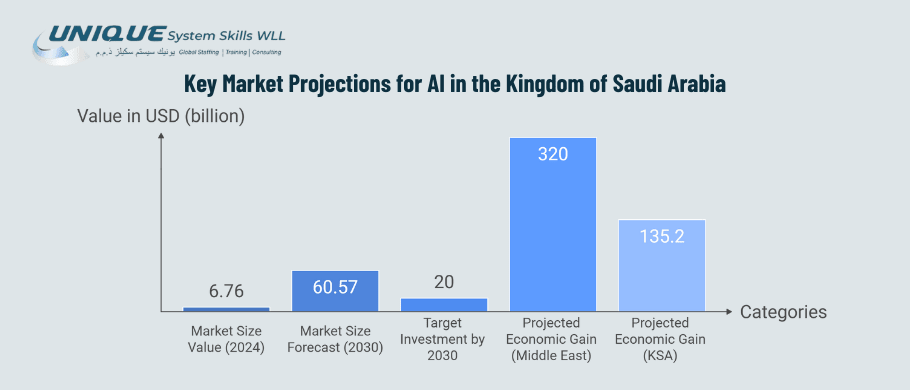
- The Saudi Arabian AI market was valued at USD 6.76 billion in 2024, potentially reaching USD 60.57 billion by 2030 (CAGR: 43.1%).
- The KSA Generative AI market stood at USD 292 million in 2024, expected to increase to USD 4.8 billion by 2034 (CAGR: 32.1 %).
- The edge AI segment hit USD 312.5 million in 2024, forecasted to exceed USD 1 billion by 2030 (CAGR: 22.5%).
Web Development Careers in Saudi Arabia: From Coders to AI Engineers
The Rise of AI Engineers and Hybrid Roles
AI engineers combine software development, data science, and machine learning expertise. They’re less about writing endless lines of code and more about managing AI-driven systems.
Future Job Market Outlook and Salary Projections
As demand grows, salaries for AI-skilled web developers are projected to overtake traditional developer roles significantly. Professionals with AI certifications will have a strong competitive advantage in Saudi Arabia’s job market.
Here’s what’s exciting about salaries:
Earlier, web developers made about $65,000 – $85,000 per year. Now, developers who know AI tools make $90,000 – $130,000 per year. This is because people using AI to finish their work are 30-60% faster than before.
Sector-Wise Applications of AI-Driven Web Development
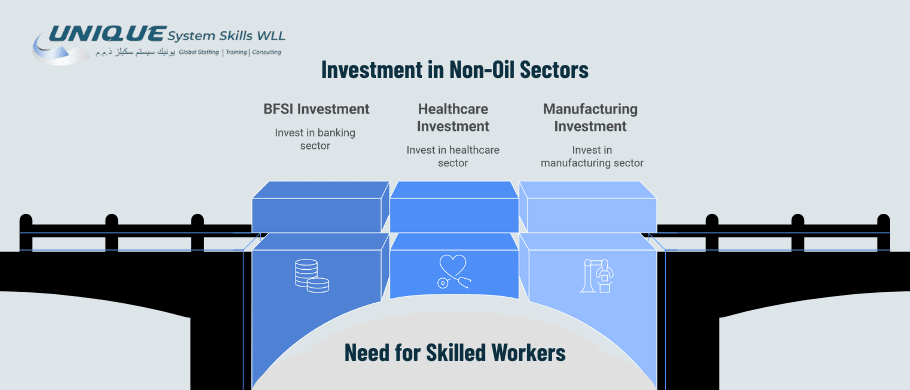
AI-powered web development is not limited to the tech sector. It’s impacting every major industry in Saudi Arabia. With Vision 2030 driving digital adoption, businesses are leveraging AI to streamline operations and improve user engagement.
Banking & Finance
Banks and fintech startups in Saudi Arabia are integrating AI-enabled fraud detection, predictive financial dashboards, and chatbots for customer support. AI-driven websites in BFSI provide real-time insights, ensuring more personalized financial services.
Healthcare
The Saudi healthcare sector is investing in smart patient portals, AI-driven telemedicine platforms, and predictive analytics. For example, AI-enabled scheduling and virtual assistants reduce waiting times, offering patients more personalized experiences.
Manufacturing & Logistics
Smart factories are on the rise. AI-powered web applications integrate IoT dashboards, enabling real-time monitoring of supply chains, predictive maintenance, and logistics optimization.
Government & Smart Cities
Saudi Arabia’s smart city projects, including NEOM, rely heavily on AI in web applications for citizen engagement, e-governance, and urban planning. AI-based platforms streamline services like licensing, payments, and urban resource management.
The Business Case for Upskilling in AI and Web Development
The growing demand for AI-based solutions means that web development careers in Saudi Arabia must evolve quickly. Upskilling is no longer optional, it’s a necessity.
Why Certifications Matter for Career Growth
Professional certifications validate expertise in AI-powered coding and system design. According to studies, certified professionals not only earn higher salaries but also gain faster promotions.
AI-specific certifications are particularly valued because they:
- Bridge the gap between theory and practice.
- Demonstrate proficiency in tools like TensorFlow, PyTorch, and Azure AI.
- Align with Saudi Arabia’s Vision 2030 workforce development needs.
Training Programs Aligned with Vision 2030
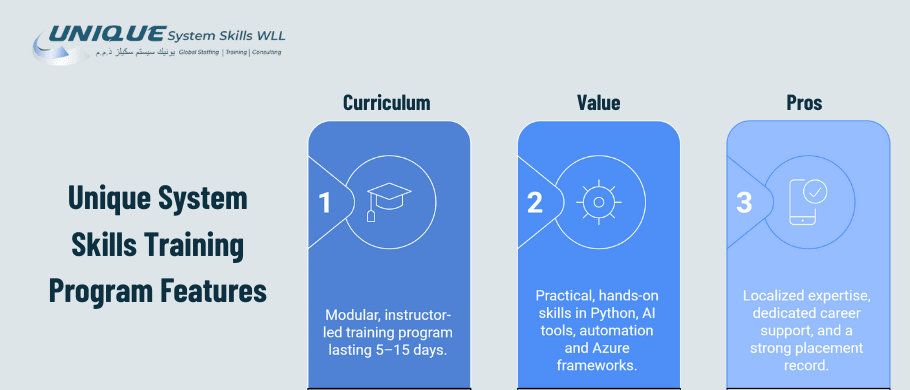
Instructor-led programs like Unique System Skills Certification offer tailored learning for Saudi developers. These training paths emphasize:
- Job-Ready Skills – practical AI coding, testing, and deployment.
- Support Systems – mentorship and collaborative problem-solving.
- Career Navigation – resume building, job placement support, and sector-specific training.
Such programs prepare professionals for careers not just in tech, but also in finance, healthcare, logistics, and beyond.
Challenges and Considerations in AI-Powered Web Development
While AI brings exciting opportunities, developers and businesses must also manage its challenges.
Ethical AI and Governance in Web Systems
AI decisions must remain transparent and accountable. Bias in algorithms can create unintended consequences, especially in sectors like finance or healthcare. Developers in Saudi Arabia must ensure AI systems are ethical and fair.
Data Security, Privacy, and Compliance
As more organizations adopt AI-driven web applications, concerns around data privacy and security intensify. Developers must design platforms compliant with Saudi regulations, ensuring personal data is handled securely while fostering user trust.
FAQs: Future of Web Development in Saudi Arabia
Q1. What is driving the future of web development in Saudi Arabia?
Answer: The primary driver is Vision 2030, which emphasizes AI, data, and digital transformation across all sectors. Government investments and private-sector commitments are increasing AI adoption in web development.
Q2. How does AI compare with traditional web development?
Answer: Traditional development relies heavily on manual coding, whereas AI automates repetitive tasks like code generation, testing, and debugging. Developers now act as code managers, overlooking AI tools instead of writing every line of code.
Q3. Which AI tools are most popular among developers in KSA?
Answer: GitHub Copilot, Wix ADI, and ChatGPT are among the most widely used tools. They help developers with real-time code generation, design automation, and intelligent debugging.
Q4. What industries in Saudi Arabia benefit most from AI-powered web development?
Answer: Banking, healthcare, logistics, and government are leading adopters. AI enables fraud detection in finance, predictive analytics in healthcare, smart dashboards in manufacturing, and citizen services in smart cities.
Q5. What skills will future web developers in Saudi Arabia need?
Answer: Beyond coding, developers need knowledge of AI orchestration, machine learning basics, cloud computing, and ethical governance. Certifications in AI and data science are becoming essential.
Q6. Are there enough training programs for Saudi developers to upskill?
Answer: Yes. Training providers like Unique System Skills offer certification programs aligned with Vision 2030. These programs provide hands-on learning, career guidance, and skills directly applicable to Saudi Arabia’s digital economy.
Conclusion: Building Saudi Arabia’s AI-Powered Digital Future
By 2030, experts have predicted that the AI market in Saudi Arabia will be worth $60.57 billion. That’s a massive amount of money flowing into tech jobs transforming web development into an AI-first discipline.
The future of web development in Saudi Arabia is aligned with AI adoption, reshaping everything from healthcare portals to smart city infrastructure.
For developers, this shift means moving from manual coding to AI-powered Overview. The winners will be those who embrace AI tools, earn certifications, and adapt to AI-driven web development trends in KSA.
In the words of Vision 2030: the Kingdom is not just preparing for the future, it is building it today. For web developers, the message is clear: don’t just watch the change, be a part of it.

